
The love Grinch?
On my obsession with chocolate, and a recipe for mousse au chocolat

While walking my dachshund Charlie this afternoon (side note: he was named after Charles Aznavour), I strolled past a schoolhouse and saw that one of the classrooms was decorated with big red hearts. Valentine’s Day is coming up, it suddenly dawned on me, as I rolled my eyes. No, I’m not a Grinch when it comes to celebrating love; quite the contrary, I love nothing more than relishing it at the table every single day, not just on February 14th.
In fact, one of my favorite passages from M.F.K. Fisher’s Love in a Dish, reads, “There can be no warm, rich home-life anywhere else if it does not exist at the table, and in the same way there can be no enduring family happiness, no real marriage, if a man and a woman cannot open themselves generously and without suspicion one to the other over a shared bowl of soup as well as shared caress (…). Then and only then, they will find that they can face each other warmly and gaily across the table again, and that even that steak-and-potatoes, when they have been prepared with a shared interest and humor and intelligence, can be one of the great pleasures which leads to another, and perhaps, who knows, an even greater one.”
Swoon…
What I’m not a fan of (and that’s putting it mildly) is all the heart-shaped consumerism that comes with the holiday. The chocolate, however, I’ll happily make an exception for.
If there’s one food I can’t imagine a world without, it’s chocolate. Give me a bar of the really good stuff (at least 72% cocoa solids), and my day will be made. Though I try to be as moderate as possible when faced with temptation, there are occasions that demand such a bar be devoured with delicious abandonment and zero shame. There’s a whole lot of madness happening out there these days, and that delectable creation called chocolate can beautifully serve as my respite.
Of course, I don’t always tear open a bar and call it a day. Sometimes, I’ll walk into a fancy chocolatier, the kind where the chocolates are displayed like edible jewels, and treat myself to a pretty box. Places like Mary, which happens to have a chocolate named after me, I discovered when I visited one of their shops in Bruges recently.
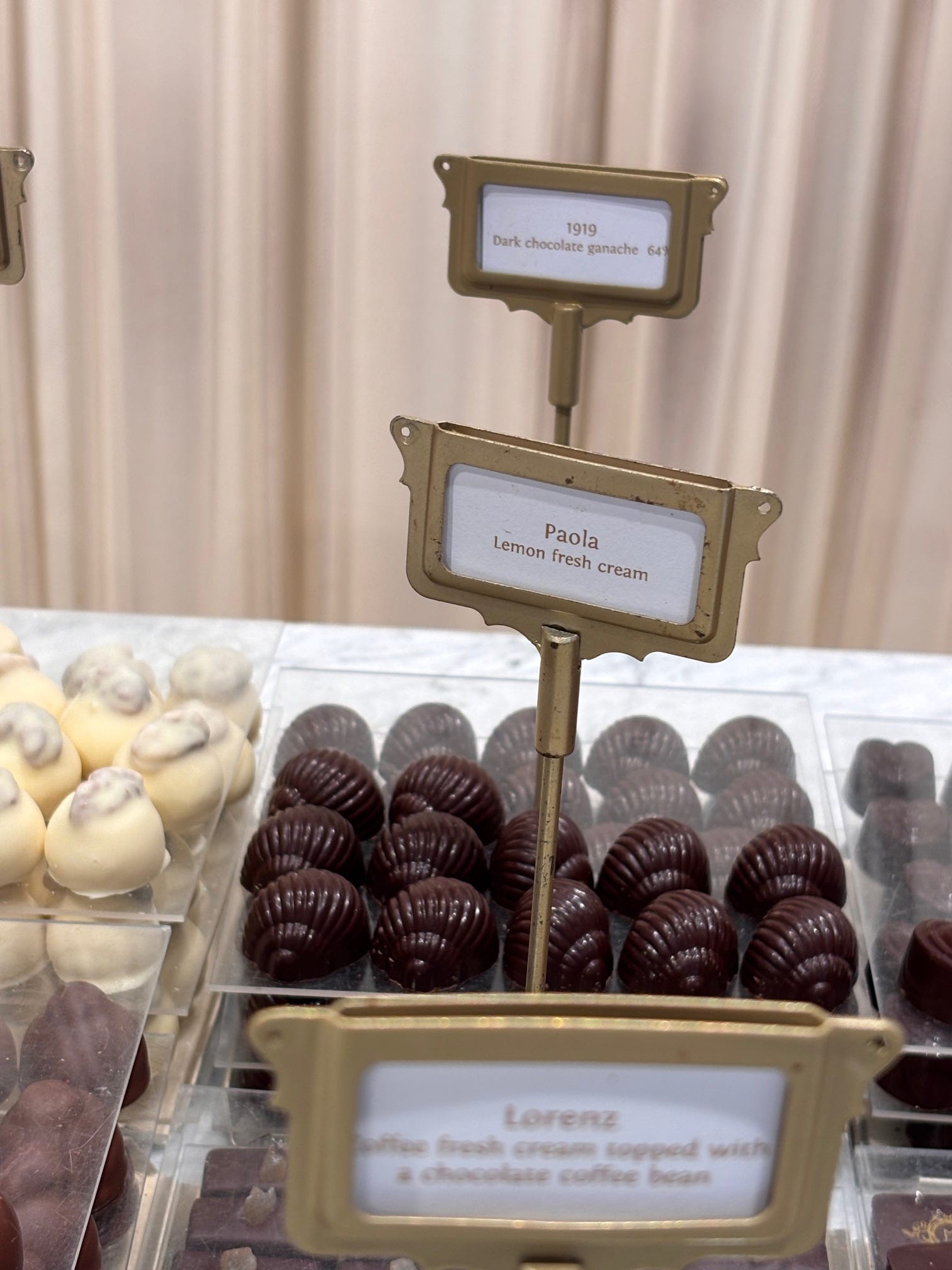
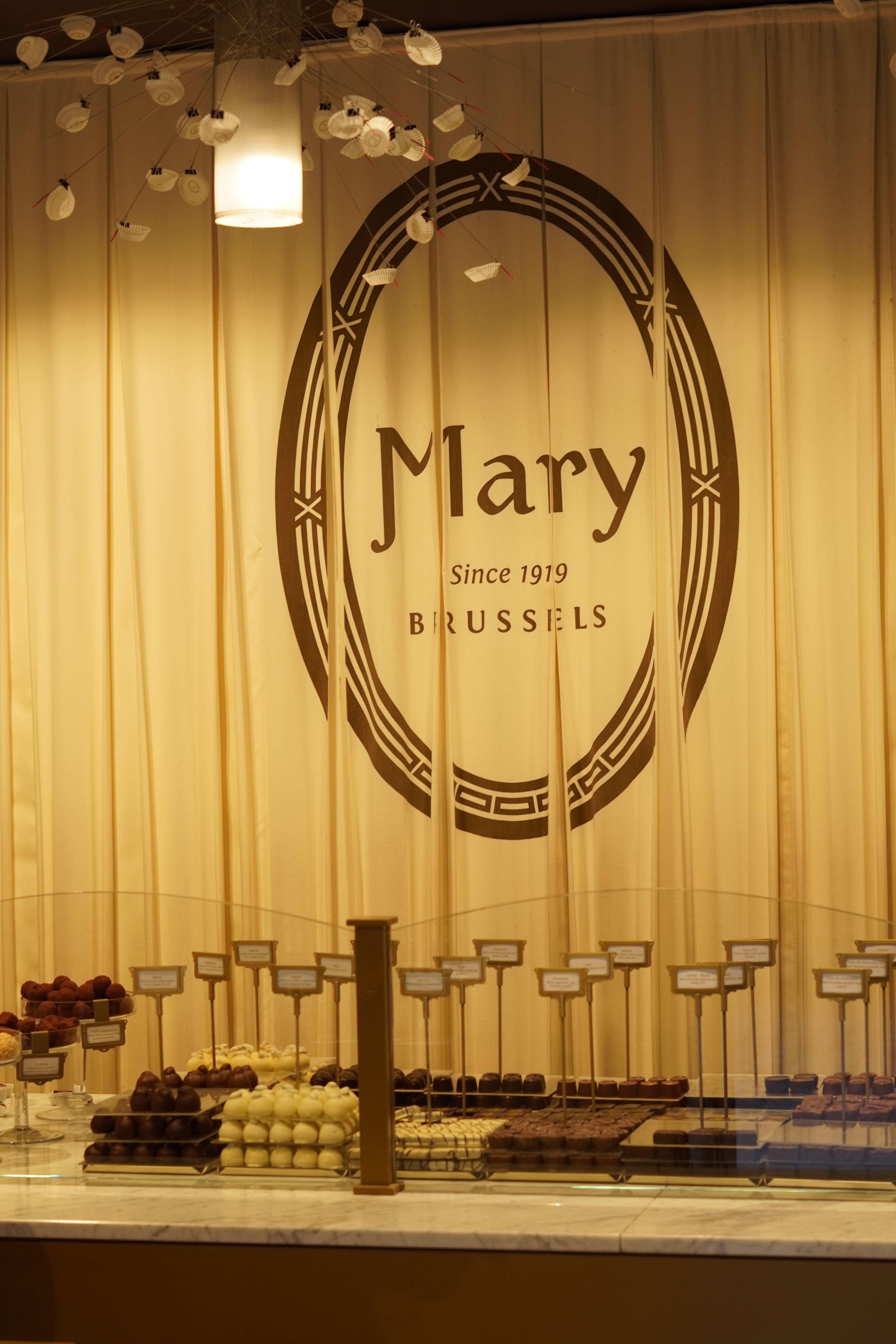
Mary Delluc can rightfully be called the ‘Grande Dame of Belgian Chocolates.’ She opened her first shop in 1919 on the Rue Royale, not far from the Royal Palace. At the time, chocolate was still regarded as a medicinal product, yet Madame Delluc succeeded in changing its status to that of a luxury item in Brussels. Her chocolates soon became the choice of Belgian royalty, and, in 1942, Mary was awarded the Royal Warrant of Appointment by King Leopold III. Everything at the exquisite Mary boutiques attests to the brand’s finesse, from the flamboyant Rococo-style furniture to their gorgeous boxes. What a delight to walk in and surround yourself with all this deliciousness!
My favorite thing to do with chocolate is not just stuff my face, however, but actually cook with it. And chocolate inspiration seems to find me everywhere I go. Years ago, while dining at a restaurant in Norway, I was deliciously captivated by the gastronomic prowess of the young, bright chef who had managed to make the place a huge success in the few short months since its opening. Every dish delighted the senses with an unsurpassable level of creativity, and as each course progressed, I became ever more smitten. Especially when this culinary wunderkind placed before me a dish consisting of a small wedge of blue cheese crowning a delicate chocolate biscuit. I then watched in awe and admiration as he deftly drizzled it with dark, molten chocolate. To this day I can still recall how the bitter chocolate complemented the smoky pepperiness of the cheese. It dawned on me that chocolate is one of the most versatile—not to mention intriguing—foods. One that we often take for granted, not realizing that up until the second half of the 19th century, we were pretty much deprived of its many pleasures.
Though chocolate was introduced to Europe via Spain in the early 16th century, it was a commodity only few could afford. Much like with coffee and tea, sipping chocolate was a privilege reserved for the well-heeled, who served the drink in fine china and made it more palatable with exotic ingredients such as cinnamon, vanilla, chili pepper, aniseed, and other costly spices. But chocolate beverages weren’t only chic. They were also believed to promote good health and lift the spirits. In the 17th century, doctors often prescribed chocolate to their patients, firmly believing in the drink’s restorative properties. Henri Stubbe, physician to King Charles II, called hot chocolate “one of the most wholesome drinks.” It treated everything from stomach aches to coughs, and, he wrote, “conduceth much to the lengthening of life; the reason is, because it yields good nourishment to the body, and it helps to digest ill humours.” (The Indian Nectar, or, A Discourse Concerning Chocolata, 1662).
In 1828, Dutchman Casparus van Houten invented the cocoa pressing method, a development that not only made chocolate tastier but also easier to mass produce. Using a hydraulic press, he separated the fat from the cocoa solids, which were then turned into a powder that was treated with alkaline salts, neutralizing the acids and softening the flavor. This process became known as ‘Dutching’ and resulted in an easily soluble powder that could be used to make a more digestible, less heavy chocolate drink.
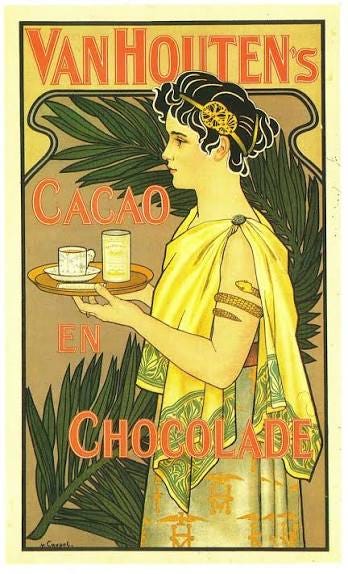
Additionally, the cocoa butter was used to make candy bars and other confections. The chocolate revolution had started in earnest and continued in the hands of chocolate barons like Richard Cadbury (who traveled to the Netherlands to buy a cocoa press from Van Houten), Henri Nestlé, and Milton Hershey.
More than just an ingredient in desserts, a hot drink, or confectionary, chocolate can be used in myriad savory dishes. In fact, in my kitchen, a bar of high-quality dark chocolate and a tub of cocoa powder are just as indispensable as garlic, sea salt, and good olive oil. I add squares of chocolate to my hearty bean chilis, letting them slowly melt as they infuse the dish with incredible richness and balance the bold flavors with silky sweetness. In tomato-based stews and sauces, chocolate tempers the acidity and even acts as a thickener. Homemade barbecue sauce without the complexity of chocolate? Unthinkable.
When roasting root vegetables, I often make a marinade of thick balsamic syrup, cocoa powder, and thyme, loosening it with a shot of red wine or port. Trust me, after trying this, glazed carrots or parsnips will pale in comparison. Robust Mediterranean herbs such as rosemary and lavender tend to go very well with chocolate, too.
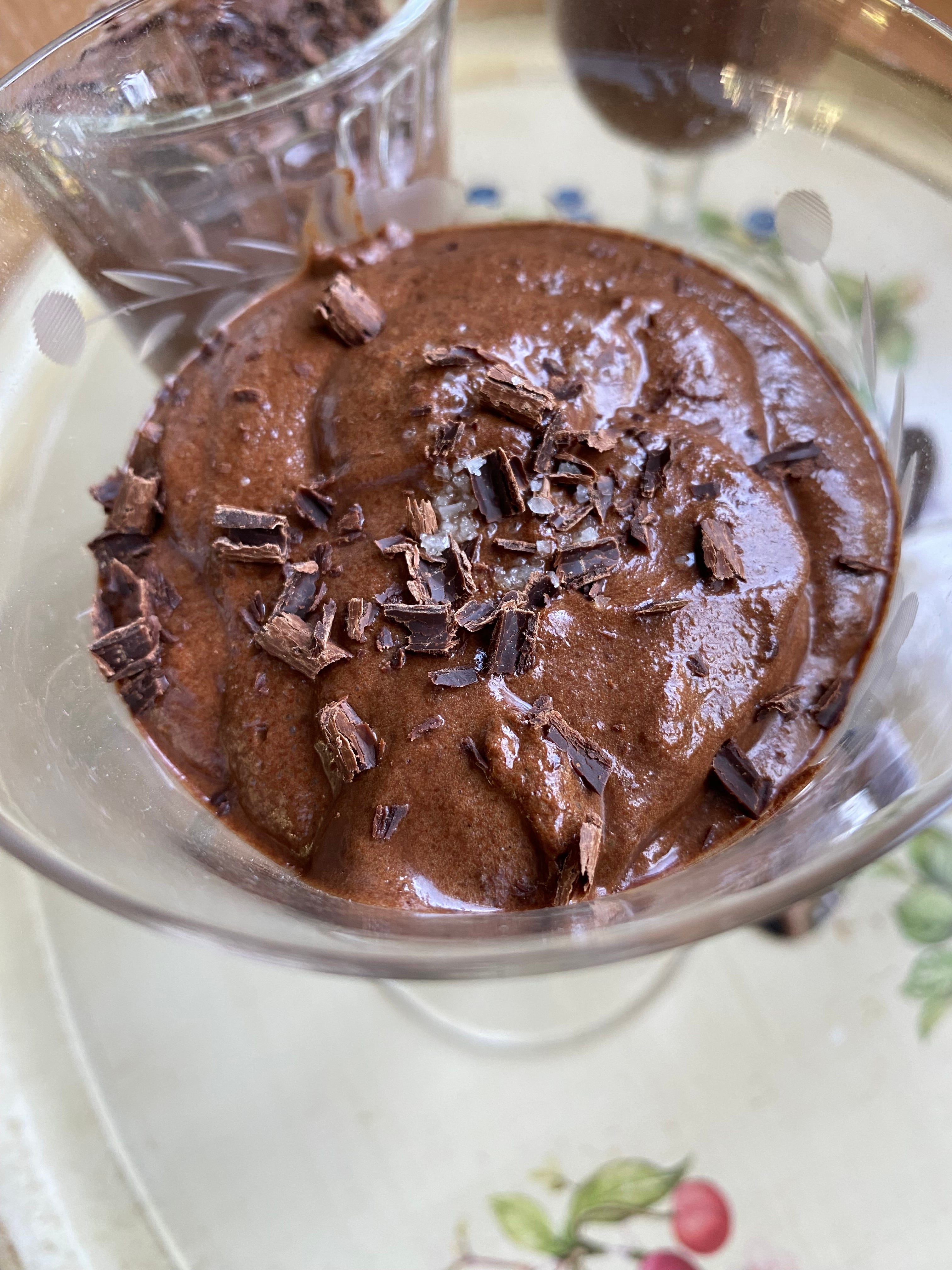
If, unlike me, you happen to celebrate Valentine’s Day and are looking for the perfect dessert, mousse au chocolat is always a great choice. These days, I make mine with aquafaba, the liquid that comes in a can of chickpeas and usually gets rinsed down the drain. And what a shame that is! Composed mainly of starches and proteins, aquafaba does a masterly job at replacing egg whites in delicate recipes such as pavlovas, meringue tarts, or mousse au chocolat. Much like real egg whites, aquafaba magically whips up into a froth that gives way to gorgeous peaks in a matter of minutes.
In my humble opinion, this recipe for mousse au chocolat is just as delicious as all the versions I’ve tried in France. Maybe even more so. It could be that the lack of eggs does away with some of the richness, leaving plenty of room for the dark lusciousness of the chocolate to take center stage. Also, it doesn’t call for any sugar, just the best quality dark chocolate you can get your hands on. Because you can prepare it in advance, it’s also the ideal dessert to make for your next dinner party. I guarantee people will be impressed, especially when you ‘spill the legumes’ about the magic ingredient.
If you’d like, try infusing your melted chocolate with a sprig of rosemary before stirring it into the softly whipped aquafaba. Then gloriously finish it off with a few flakes of fleur de sel. A glass of Banyuls (a warm and unctuous fortified wine from the south of France) will make this treat—or anything with chocolate, for that matter—all the more delightful.
And you thought I wasn’t romantic!
Tasty bites before you try my recipe, and we chat again…
If you’re looking for more chocolate recipes, may I suggest my cantucci with dark chocolate and orange? They’re a breeze to make and so delicious. Find the recipe here.
Want to see me make this mousse au chocolat? Have a look here.
Mousse au Chocolat
Serves 4
Ingredients:
150g dark chocolate (72%), plus extra for garnish
1 tsp apple cider vinegar
Aquafaba from 1 (400g) can of chickpeas
1 tsp vanilla extract
½ tsp fleur de sel
Instructions:
Melt the chocolate au bain-marie and set aside to cool. Drain the chickpeas and place the aquafaba in a clean bowl (I use a standing mixer) and add the apple cider vinegar. Whisk until peaks start to form and the mixture is thickened like meringue. Once the chocolate has cooled, stir in the vanilla extract and salt. Fold the chocolate in two batches into the meringue, making sure you mix it in well. Divide the mixture over four glasses and refrigerate for at least three hours. Serve with grated chocolate and an extra sprinkle of fleur de sel.