
L’oeuf mayo
An iconic ‘plat canaille’ (plus the 'not-so-secret' recipe)

Though eggs may no longer feature prominently in my diet these days, I was reminded of l’oeuf mayo when I wrote about Paris’ famous bouillons recently. In fact, this humble dish is one of the most popular starters at these restaurants. Ever wondered about their history? Keep reading!
The best dishes are often the simplest: a salad of ripe summer tomatoes scattered with crisp shallots and drizzled with a mustardy vinaigrette, a fresh baguette slathered with salted butter and stuffed with (plant-based) ham (yes, it exists, and it’s made by La Vie!), a salad of grated carrots with a handful of toasted chopped walnuts, freshly picked greens with chervil and a simple dressing, and, for many, a couple of hard-boiled eggs, split in half and blanketed by a layer of homemade mayonnaise. The latter, a humble culinary masterpiece known as ‘l’oeuf mayo,’ is an often underestimated and once shunned classic of French cuisine.
This bistro classic was probably first served in Parisian ‘bouillons’ (eateries offering cheap and plentiful meals) during the second half of the 19th century. (Read more about them here.) Because of their almost banal austerity, eggs with mayonnaise were labeled a ‘plat canaille’ (simple fare) and rarely appeared on the menus of the better (read: pretentious) restaurants. You could order them at bistros and ‘routiers,’ but by the late 1980s, the French had lost their appetite for oeufs mayo, partly due to the fear of high cholesterol. Nevertheless, culinary critic Claude Lebey wasn’t having it, and therefore, he founded the ASOM (Association de sauvegarde l’oeuf mayo) in 1990 together with his journalist friend, Jacques Pessis. The purpose of ASOM? To maintain this French food tradition.
According to ASOM, the perfect oeuf mayo should meet four important criteria: the dish must look appetizing, and the serving should be generous; only large, quality eggs should be used; the mustardy mayonnaise should not be too thick so that it covers the entire egg; and the eggs should be served with seasonal vegetables or a few crisp leaves of lettuce.
Until 2013, ASOM held an annual competition to determine which Parisian resto made the dish best, but when Lebey retired that year, it also meant the end of ASOM. Vincent Brenot, however, decided to continue his grandfather’s work in 2018, and since then, oeufs mayo have made a major comeback. In 2018, the coveted prize was awarded again after five years by a jury of culinary connoisseurs (including ASOM members) and won by Cédric Duthilleul, chef of the chic bistro Le Griffonnier located at 8 rue des Saussaies. In June 2019, ten restaurants in the French capital participated again, and ultimately, the award was given to Clément Chicard, chef at Bouillon Pigalle, a hip restaurant not far from Montmartre in the 18th arrondissement.
When I heard the news back then, I immediately booked a trip to Paris, and a few weeks later, I found myself waiting an hour for a table, eager to experience the prize-winning eggs. And yes, it was worth the wait. The yolks were perfectly creamy, or ‘crémeuse,’ as the French would say, and the tangy mayonnaise was velvety and delicious. The price for this exceptional ‘entrée’ back then? A modest €1.90. Today it’ll run you €2.50.
According to Chicard, “Le secret, c’est beaucoup d’amour,” (the secret is a lot of love). That love (and the use of quality ingredients) certainly has not gone unnoticed, yet the recipe is not a secret at all….
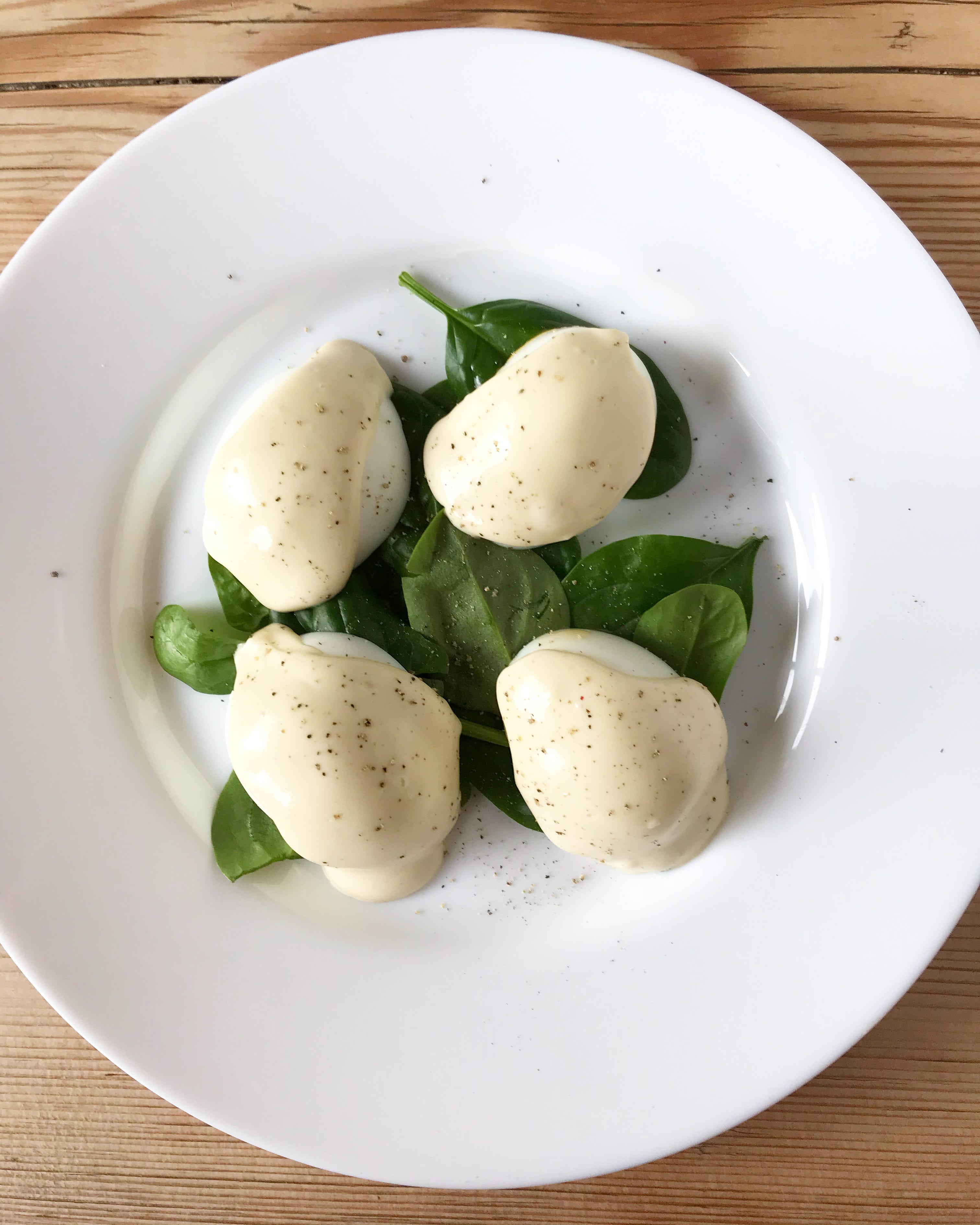
Boil two organic eggs for 9 ½ minutes (not a second longer!) in a pan of salted water. Immediately place the eggs in a bowl of ice water and then peel and slice them in half. Whisk two egg yolks with 75g Dijon mustard until smooth before slowly adding in 50cl peanut oil followed by 4g sherry vinegar, 2g salt and a few turns of the pepper mill (preferably Kampot pepper from Cambodia, rated by chefs as the best in the world). Serve the eggs with the cut side down on a bed of baby spinach, cover with the mayonnaise, and finish with a bit more pepper. In a pinch, just mix some quality ready-made mayonnaise with a little mustard, a few drops of sherry vinegar, and a dash of pepper.
Before you go…
I love using fresh chervil! Here’s how and why.
It’s almost Valentine’s Day. Looking for a chocolate recipe? Try my mousse au chocolat and read all about the history of chocolate here.
Perhaps you want to ring in the weekend tomorrow with something simple? Open a bottle of wine and make yourself a plant-based charcuterie board. Here’s how.
Did you enjoy this post? Help me continue bringing you more food, wine, and travel stories by becoming a paid subscriber!
PS: You can always share a glass with me instead!
These have really become fashionable as well. I ate an upscale version in a nice restaurant in Bergerac!